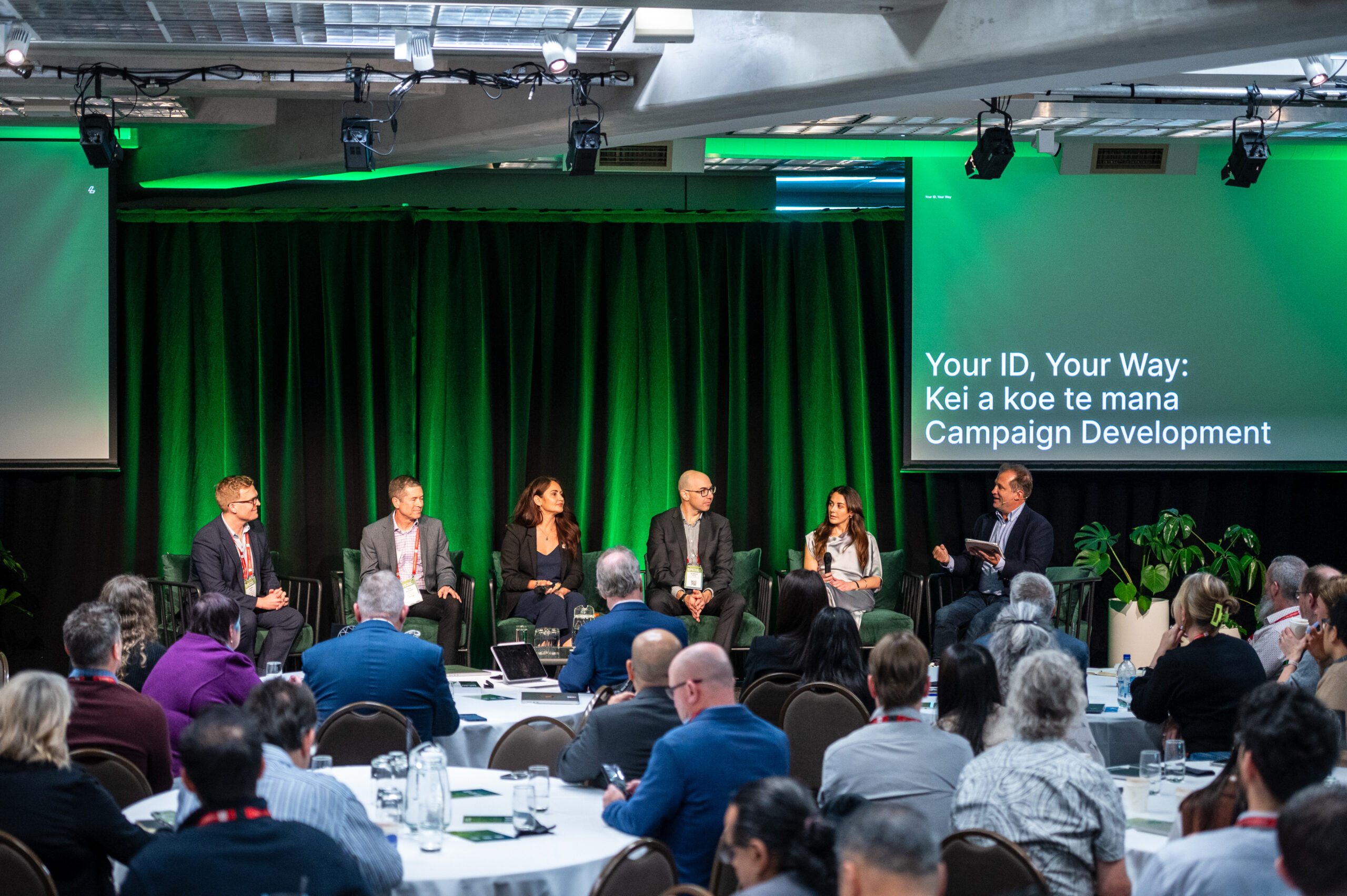
On Tuesday 11 August, Digital Trust Hui Taumata 2026 brought together leaders from government, industry, technology, privacy, security and communities at Te Papa Tongarewa to explore a shared ambition: Towards Universal Trust.
The conversations throughout the day made one thing clear: digital trust is no longer an abstract concept or a future ambition. It is becoming essential infrastructure for how people access services, prove what they need to prove, protect their privacy and participate confidently in an increasingly digital economy.
Start with people
Digital Identity New Zealand Chair Maria Robertson opened the Hui with a powerful principle:
“Identity belongs to the individual.”
That simple statement framed the day’s discussion. Trustworthy systems must begin with people — not with the data an organisation wants to collect. They must give people meaningful control, ask only for what is necessary and be designed to work in the moments that matter.
Hon Paul Goldsmith, Minister for the Public Service and Digitising Government, reinforced the need to translate this ambition into services that are easier to use.
“I would like to see ideas move from discussion to delivery, with some common use cases to reduce duplication and friction.”
His message reflected the growing momentum behind digital credentials in Aotearoa, including progress on age verification, anti-money laundering compliance and the development of an NZTA-issued digital driver licence.
Trust is built through relationships and governance
The opening keynote from Drummond Reed and Dr Karaitiana Taiuru explored how Aotearoa can build trusted, rights-respecting AI and digital identity infrastructure.
Drummond Reed challenged the audience to look beyond identity as an end in itself:
“Identity is not what matters. It’s the trust that it produces and the value that can come from that.”
Dr Karaitiana Taiuru emphasised that identity cannot be separated from whakapapa, relationships, place and community. For Māori, trusted systems need governance that reflects tikanga, protects sensitive data and enables genuine self-determination.
“It’s really important that we have community governance, because our governance systems to verify ID doesn’t match a Western form of identity.”
Together, their discussion showed why open standards alone are not enough. Trust also relies on governance, accountability and meaningful involvement from the communities affected by digital systems.
Making trust useful in everyday life
Practical adoption was a strong theme throughout the Hui.
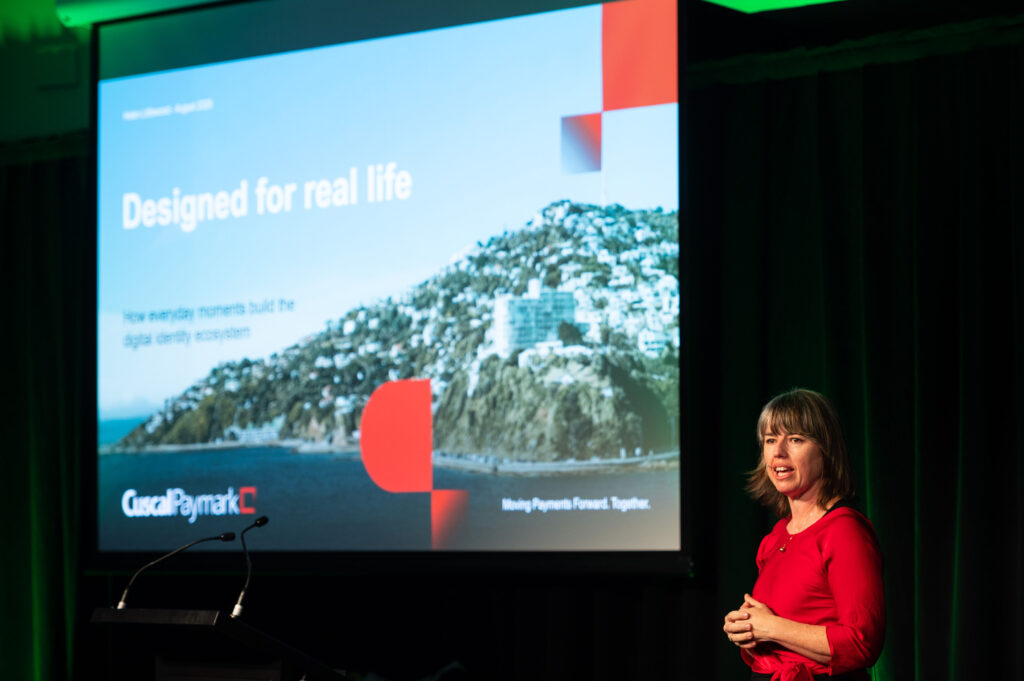
Helen Littlewood of Cuscal Paymark described the “Friday night test”: a person can prove they are old enough to buy a drink, make a payment and continue with their evening — simply, securely and legally.
“The Friday night test is something that means that Ben can walk into a bar. He can buy a beer, he can use his digital identity, and the operator is happy. Ben’s happy, and it’s legal.”
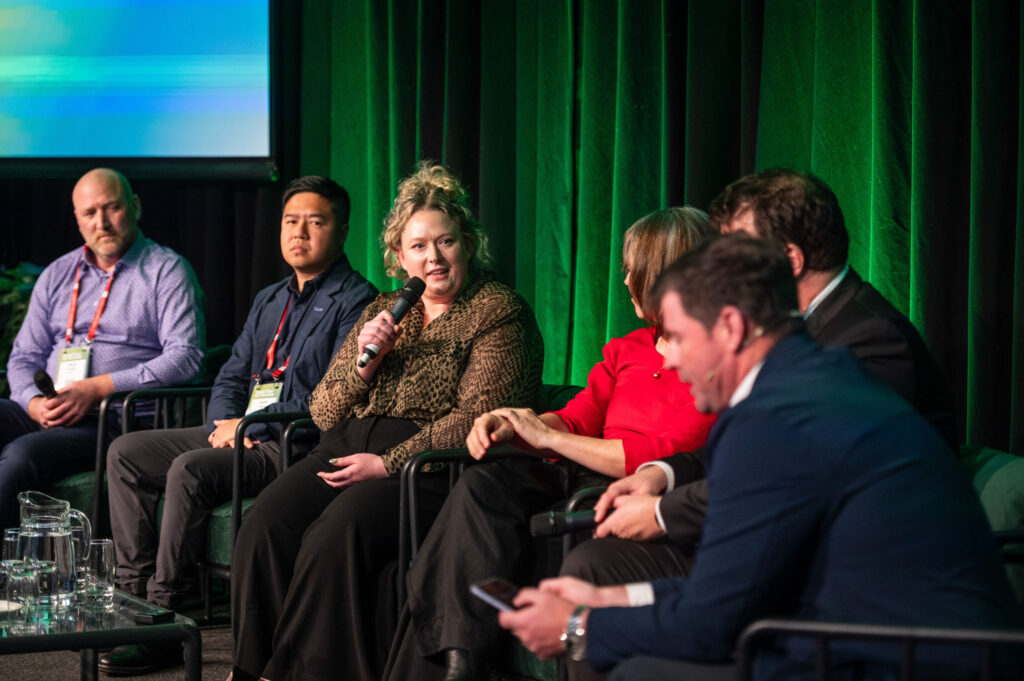
The customer experience panel extended this conversation across payments, employment, onboarding and service access. The panel highlighted that digital identity must not become another burdensome process. It needs to work at the pace of the customer journey, while ensuring people understand what they are sharing and retain control.
As Helen Littlewood put it:
“Identity is not something that you can take a whole day to do. You make an instant payment. It’s something that has to happen at the same pace.”
Open infrastructure, accountable AI
International speakers brought valuable perspective to the Hui.
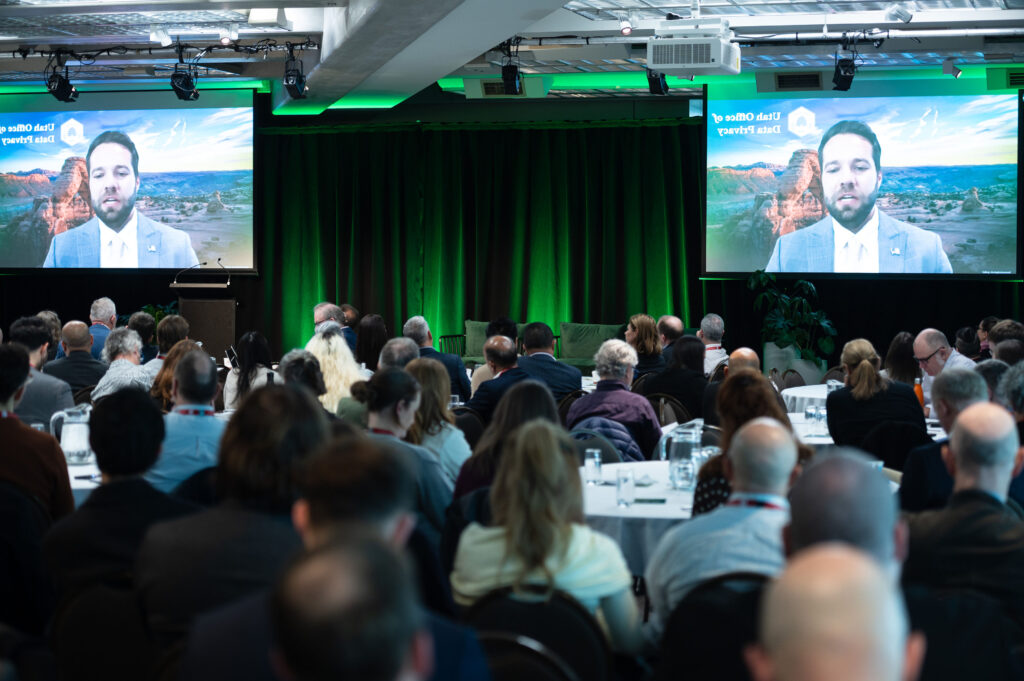
Christopher Bramwell, Chief Privacy Officer for the State of Utah, outlined a people-first approach to data ownership and governance. He argued that digital identity must be supported by rules that prevent verified personal data from being used against people’s interests.
“If you do digital identity wrong, there is a lot that can go wrong.”
Dr Pramod Varma drew on India’s experience with digital public infrastructure, making the case for open, interoperable foundations that allow people, small businesses and communities to participate in digital growth.
“It’s our duty and job to make sure that the underlying infrastructure remains open and allows small medium businesses, individuals, entrepreneurs all to play into that economic growth rather than a chosen few.”
As AI agents become part of our daily digital lives, the Hui also highlighted the need to verify who an agent is acting for, what authority it holds and how accountability can be established without compromising privacy.
From kōrero to action
The Hui closed with the Trust Compact — an invitation for organisations to identify one practical interoperability or adoption action to progress towards 2027.
That call captured the spirit of the day. Aotearoa has the expertise, policy foundations and collaborative ecosystem needed to make trusted digital identity real. The task now is to turn shared intent into practical delivery: useful credentials, interoperable services and governance that earns public confidence.
Thank you to every speaker, delegate, roundtable host, sponsor and partner who contributed to Digital Trust Hui Taumata 2026. Together, we are building an open, secure and privacy-enhancing digital future that protects, empowers and helps our people thrive.